AI assessment
Operations
Retail Match Maker
Automated talent–client matching to enable scalable growth.
60% of matches now happen automatically, doubling the number of shifts while freeing the team to focus on sales expansion.
Industry
HR
Role
Dweet
Team
4 Engineers, 1 Product Manager
Too many variables, not enough structure
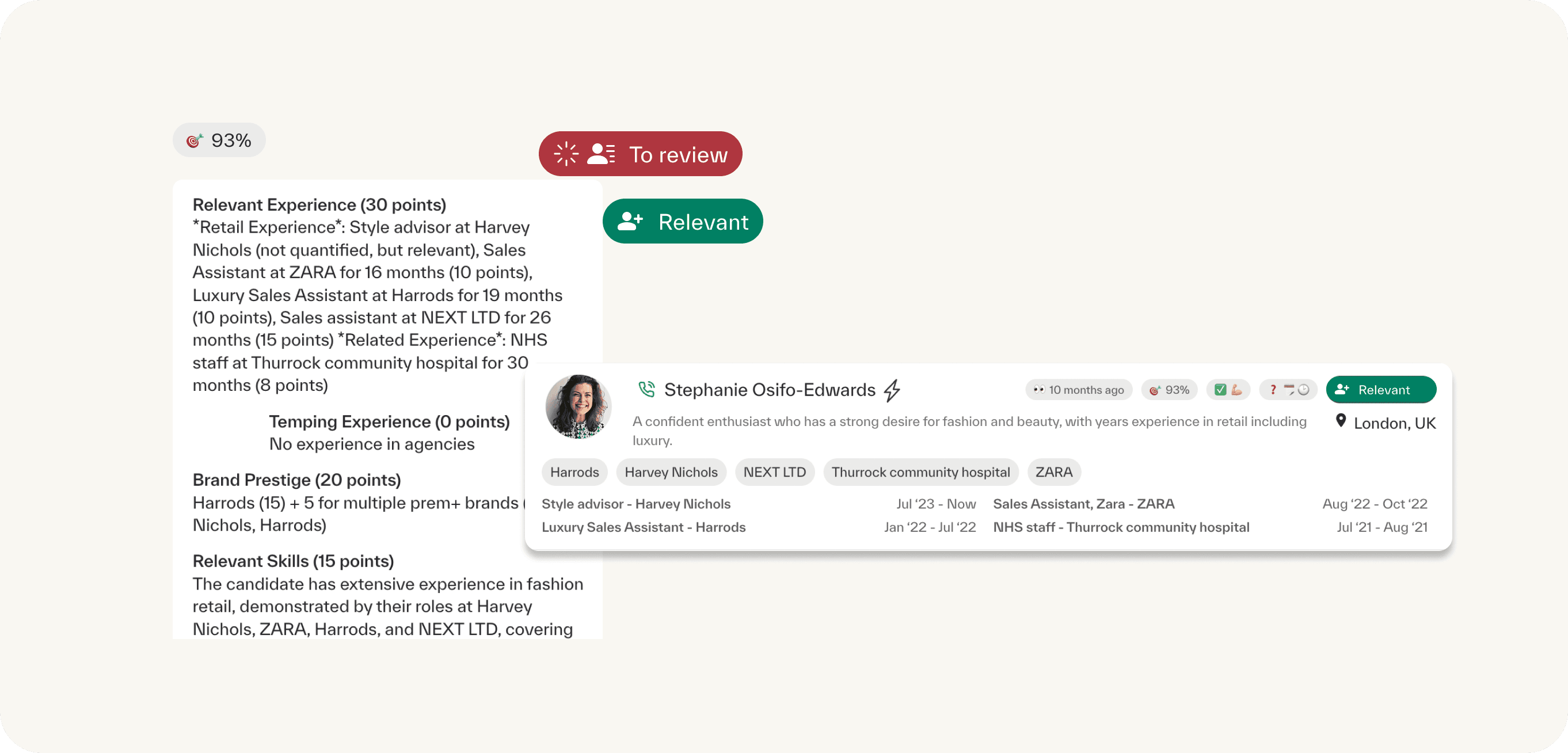
Retail clients have distinct needs — from grooming standards to brand fit — which previously was stored informally across spreadsheets, chat threads, and team memory. To scale matching, we began systematically collecting structured data from both talent onboarding and project briefs, capturing the attributes that matter most for retail roles.
Using these insights, we developed and iterated an algorithm for retail relevance, automating match suggestions and improving accuracy over time — resulting in faster, fairer, and more scalable placements.
Understanding how clients think about talent
We conducted in-depth interviews, calls, and pilots with long-term clients to understand how they assess and select talent, and where automation could genuinely help without losing the human touch. These included on-site visits to stores, walkthroughs of live bookings, and tests with clients already familiar with Dweet’s processes.
From these sessions, we uncovered key insights:
Clients valued reliability and continuity (“send me the same person as last week”) but lacked tools to do so.
Feedback loops were inconsistent, limiting our ability to learn from previous shifts.
Heavy dependence on manual placements created bottlenecks and variability in match quality.
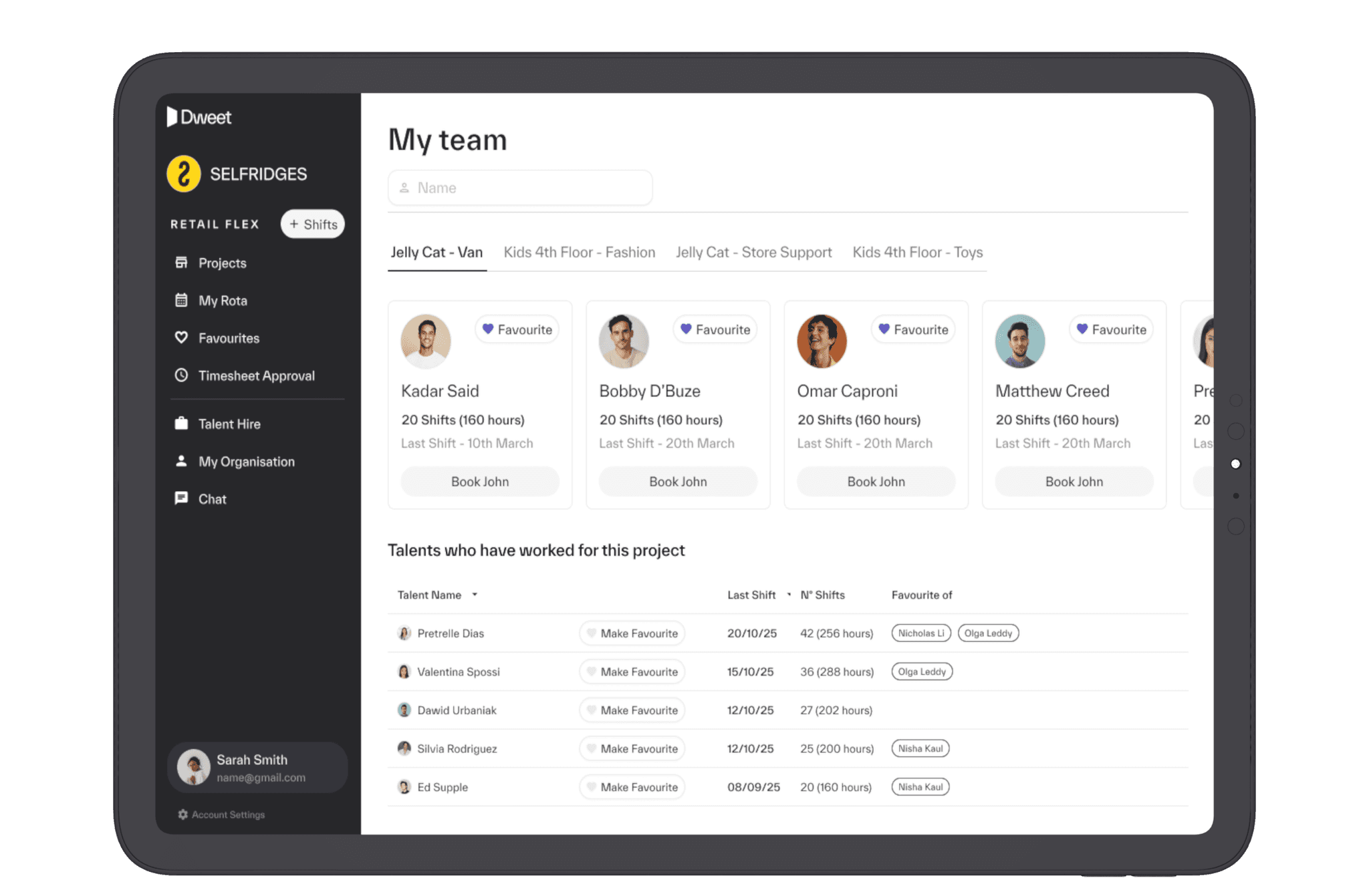
In response, we introduced new systems to increase reliability and learning across the marketplace. Clients can now rate talents, add favourites, or block unreliable ones, directly shaping future matches. We also launched an onboarding quiz to help talents understand expectations before their first shift, and implemented stricter strike and blocking policies for no-shows or last-minute cancellations.
Together, these initiatives strengthened trust on both sides, improved match quality, and made the experience more predictable and scalable.
Designing a self-learning matching system
1. Client feedback loops
Integrated post-shift ratings directly into timesheets to improve completion rates. Automatically promoted top performers into Favourites and flagged issues via a Strikes system. Introduced blocking to prevent repeat bookings with unsuitable talents.
2. Favourite-driven automation
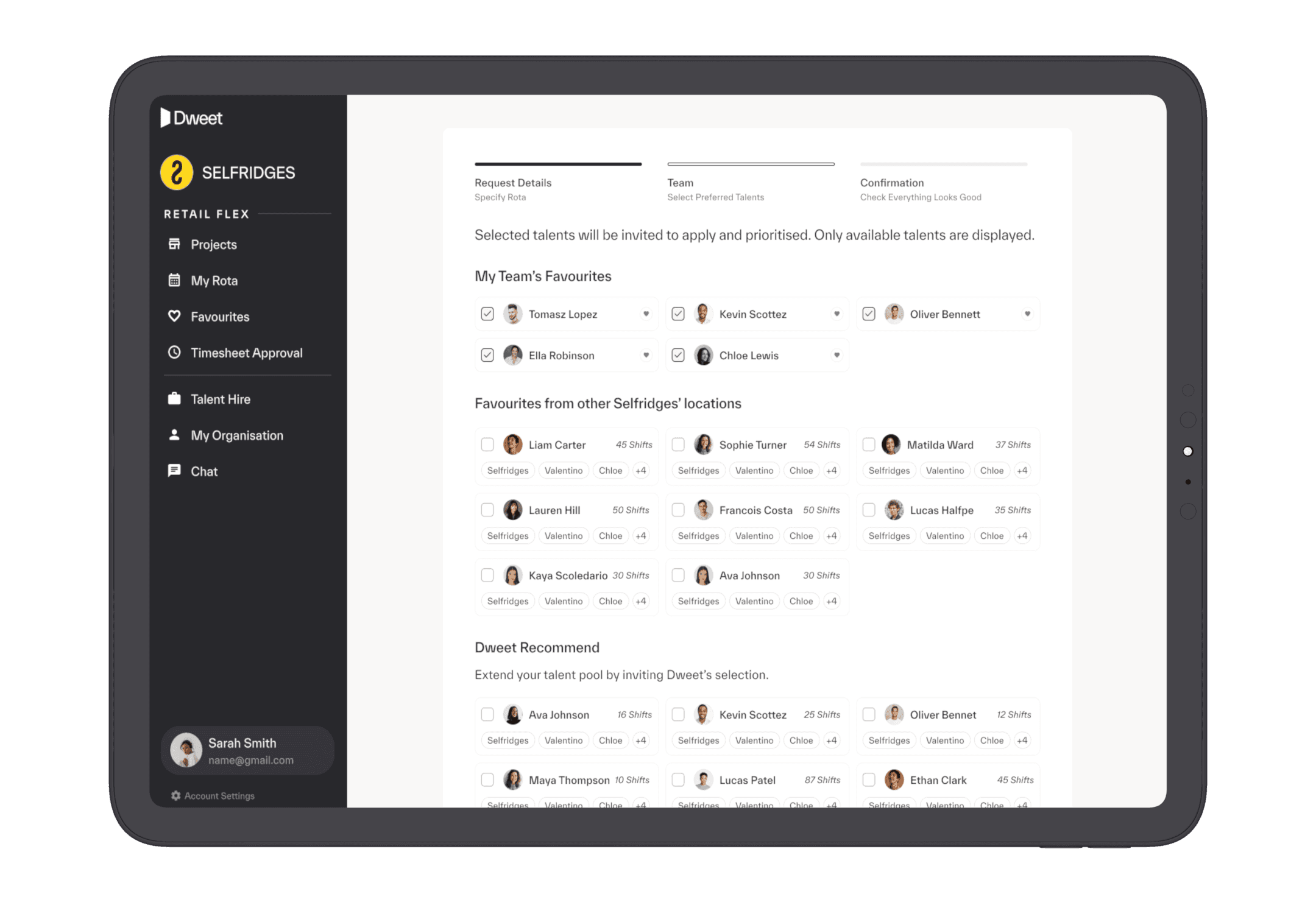
Built a “My Favourites” page where clients can curate, view, and manage preferred talents. Added logic for My Team Favourites, Brand Favourites, and Dweet Recommended suggestions. Simplified lists (max 12) and adjusted sorting rules based on recent shifts and performance.
3. Automated booking logic
The system now auto-selects favourites before suggesting new matches.
Real-Time Visibility
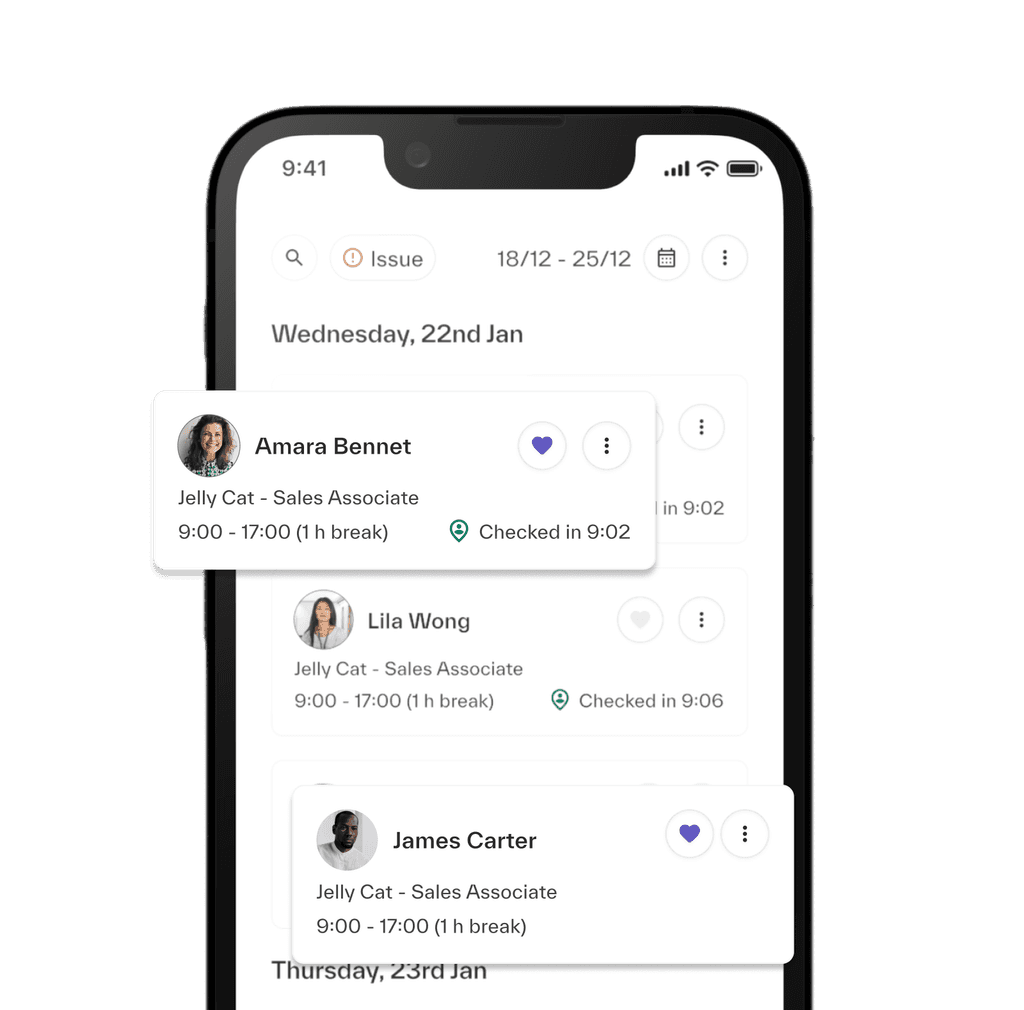
Store managers get a clear picture of who’s scheduled across shifts.
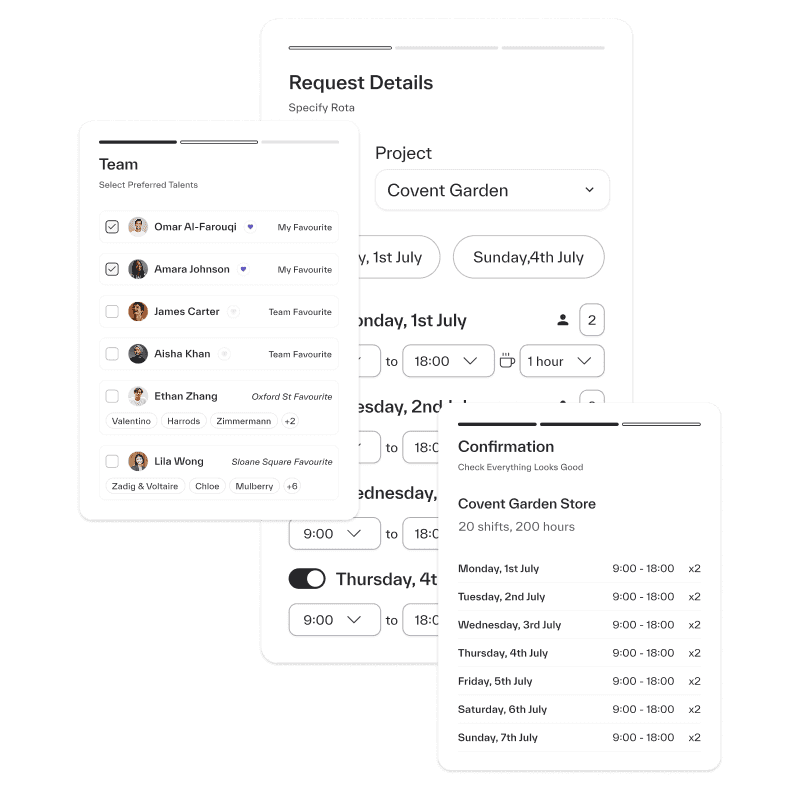
Flexibility and Speed
Managers can submit shift requests and optionally selecting preferred team members for specific needs, for example, pop-ups or launch events.
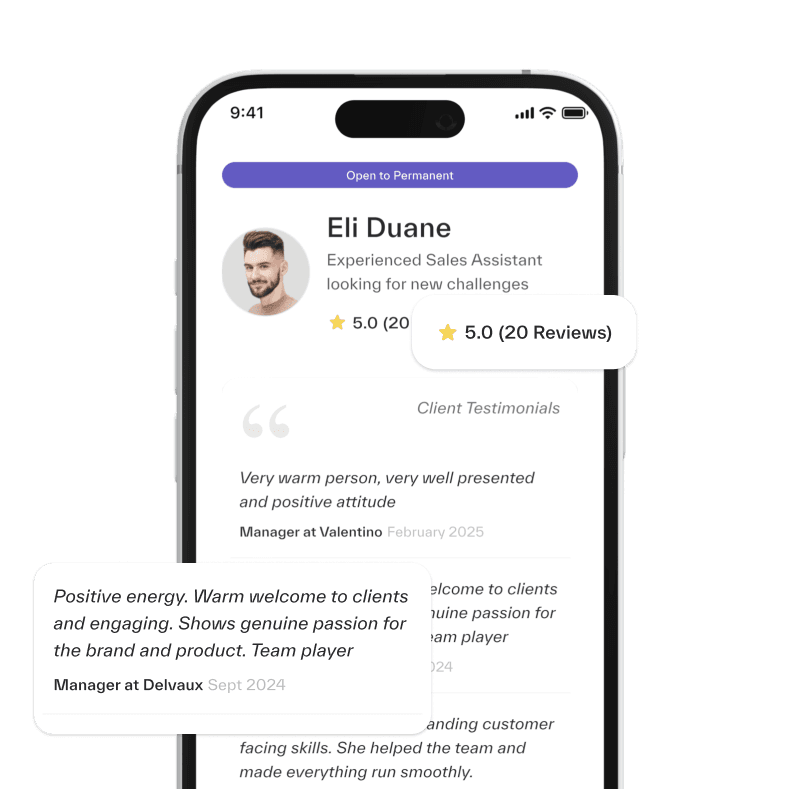
Book with Confidence
Testimonials and reviews are surfaced, reducing the decision-making friction, reinforcing trust and promoting repeat bookings.
Scaling human intuition through data
60% of shifts are booked automaticly
This allowed to double the number of shifts while freeing the team to focus on sales expansion.
2x in Favourites adoption
Clients now recognise and curate talent pools.
Better matching = better service quality
Improved match quality and reduced cancellations, leading to faster, more reliable staffing.